
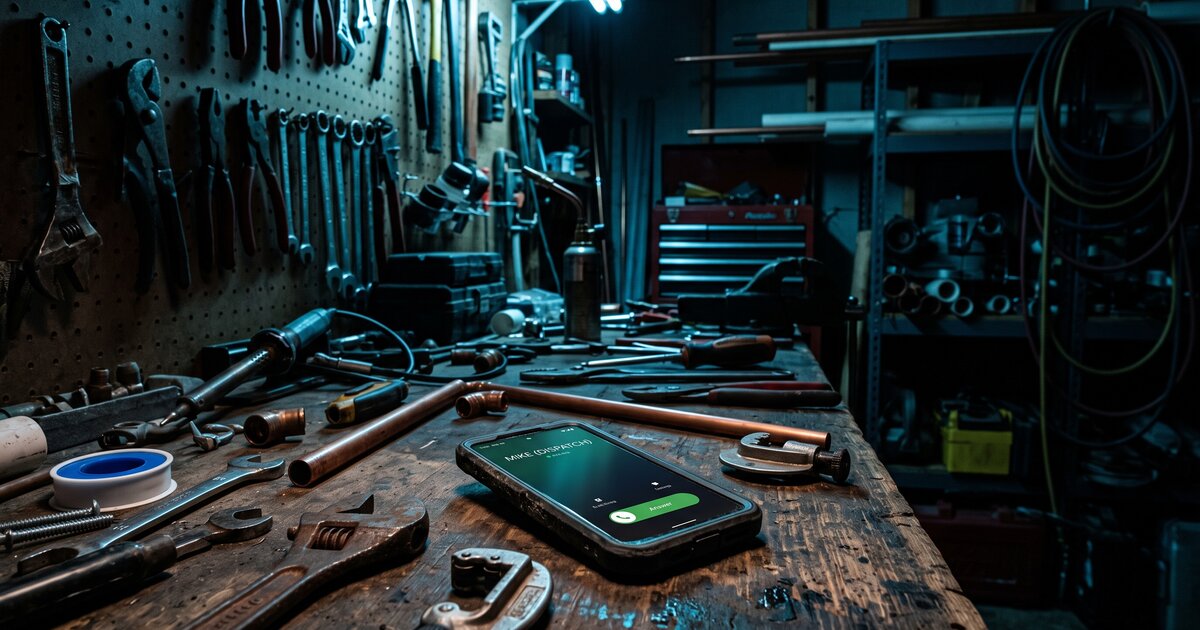
It’s 9:47 on a Tuesday night. A homeowner’s water heater just died. Cold shower in the morning, no hot water for dishes, and they’ve got houseguests arriving tomorrow. They Google “emergency plumber near me” and start calling down the list.
Your business is third on that list. Your phone rings four times and goes to voicemail. They don’t leave a message. They call the next number. Then the next. By 10:15, someone else has the job.
This is the after hours phone answering small business problem that costs thousands of dollars every month. Not because you’re bad at what you do. Because you’re not sitting by the phone at 9:47 PM on a Tuesday.
The After-Hours Problem Nobody Talks About
According to a 2024 study by 411 Locals, 62% of calls to small service businesses go unanswered. That’s not a typo. Nearly two-thirds of your incoming calls hit voicemail, and most of those callers never call back.
For service businesses, the after-hours gap is even worse. Research on plumbing businesses shows that 48% of emergency calls come in between 6 PM and 8 AM. The exact hours when nobody’s answering. HVAC follows the same pattern: most customer calls hit after 5 PM, on weekends, or during holidays, because that’s when systems fail and homeowners are actually home to notice.
Think about what that timeline looks like. You finish your last job at 5:30 PM. You’re cleaning up the van, doing paperwork, maybe grabbing dinner. Your phone is on, but you’re done for the day. Between 6 PM and midnight, four emergency calls come in. You see the missed calls the next morning. By then, all four customers have already hired someone else.
Here’s what that means in dollar terms. The average missed service call represents $1,200 in immediate revenue. For higher-ticket work (system replacements, major repairs), that number jumps past $3,500. A plumbing shop missing just 30% of its calls is walking away from $8,000 to $15,000 every year. An HVAC contractor losing half the after-hours calls? That’s $25,000 to $40,000 in revenue walking out the door because nobody picked up.
The calls are coming in. You’re just not there to catch them. And the traditional answer (hire an answering service, pay someone to be on call, check voicemail every hour) either costs too much or doesn’t actually solve the problem.
What Happens When You Miss That Call
I learned this the hard way running an axe-throwing venue. Someone would call at 7:30 PM asking about a Friday night corporate event. We’re closed. Phone goes to voicemail. I’d see the missed call Saturday morning and call back by 10 AM. Felt responsible. Professional, even.
Too late. They’d already booked with someone else. Probably by 8:15 PM the night before.
For a while, I tried checking voicemail every couple of hours. That lasted about a week. Then I tried having staff check messages before they left. They’d forget, or they’d see a callback number and figure “I’ll do it first thing tomorrow.” The problem wasn’t discipline. The problem was that the customer’s timeline and my business hours didn’t line up.
The research backs this up. Harvard Business Review found that responding within one hour makes you seven times more likely to qualify a lead compared to waiting just one more hour. Wait 24 hours and you’re 60 times less likely. The average business response time in that study was 42 hours.
Forty-two hours. For a homeowner with no hot water, that might as well be never.
The caller doesn’t wait. They move down the list. Whoever answers first, or responds fastest, gets the job. Speed beats polish. Speed beats cheaper pricing. Speed beats better reviews. Because an emergency doesn’t care about your business hours.
This isn’t about being lazy or unprofessional. It’s about physics. You can’t answer the phone when you’re crawling under a sink. You can’t return a call at 9:47 PM when you’re asleep. The traditional answer is “hire someone to cover after hours,” but most small businesses can’t afford a 24/7 answering service, and the budget options (offshore call centers, voicemail transcription services) just add another layer between you and the customer without actually booking the job.
The Automated Response That Actually Works
Here’s the flow that changed everything for my venue business, and it’s the same pattern service businesses around Augusta are using now for after-hours calls.
Customer calls your number at 9:47 PM. Phone rings four times, goes to voicemail.
Within 30 seconds, they get an automated text: “Hi, this is [Business Name]. We received your call but couldn’t answer. What can we help with? Reply here and we’ll get you taken care of.”
Customer texts back: “Water heater dead, need emergency service.”
The system reads that response, identifies it as an emergency request, and sends: “Got it. Emergency water heater repair. We can have someone out first thing tomorrow at 7 AM, or if you need tonight, we have an after-hours rate. Which works better?”
Customer replies: “7 AM works.”
System confirms: “You’re booked for 7 AM tomorrow. We’ll text you 30 minutes before arrival. Address is [pulls from their caller ID lookup if available, otherwise asks]. Anything else we should know?”
That entire conversation happens in under three minutes. No human involved. The job is booked, the customer feels heard, and you wake up to a confirmed appointment already in your calendar.
The system also logs the entire conversation, flags it as an emergency job (higher priority, maybe higher rate), and sends you a notification summarizing what happened: “Emergency water heater repair booked for 7 AM tomorrow, customer confirmed address, expects arrival between 7-7:30 AM.”
You didn’t pick up the phone. But the customer got an answer in 30 seconds, had a conversation that felt human, and booked the job before they moved on to the next number. That’s the entire point.
Why This Works (And Why You’re Not Doing It Yet)
The stats on text messaging tell the whole story. SMS messages have a 98% open rate, and most are read within three minutes of receipt. The average response time for a text is 90 seconds. For email, it’s 90 minutes.
When someone’s water heater dies at 9:47 PM, they’re on their phone. They see the text immediately. They respond immediately. The conversation happens in real time, even though you’re not there.
The missed-call text-back flow recovers approximately 30% of calls that would otherwise turn into lost revenue. That’s not every call. Not everyone texts back. Some calls are spam, some are price-shoppers who ghost after the first reply. But 30% recovery is enough to make a real dent. A plumber missing $15,000 a year to unanswered calls gets $4,500 of that back just by turning on automated SMS response. An HVAC contractor losing $30,000 annually recovers $9,000. That’s real money.
Here’s the part most small business owners get wrong: they think they need to be on the phone to close the deal. You don’t. You need to be responsive. The customer who texts back “7 AM works” has already decided to hire you. They just needed someone to answer.
I’ve seen this play out across service businesses in Augusta. A gym owner sets up missed-call text-back for trial class inquiries. An HVAC contractor uses it for after-hours emergency calls. A landscaping company runs it during peak season when the crews are all in the field and nobody’s in the office to answer. Same pattern, same result: calls that used to disappear turn into booked appointments.
The technology isn’t complicated. The setup takes an afternoon. What’s complicated is the mental shift: you don’t have to pick up every call yourself. You just have to make sure every caller gets a response fast enough that they don’t move on to the next number.
Most small business owners I talk to resist this for the same reason: “My customers want to talk to a real person.” And they’re right. Your customers do want to talk to a real person. But at 9:47 PM on a Tuesday when their water heater is dead, what they want more is an answer. Right now. If the choice is between “text conversation that books the job in three minutes” and “voicemail that gets returned tomorrow morning,” the text wins every time. Not because it’s better. Because it’s faster.
Speed wins.
Running a service business in Augusta and tired of missing calls while you’re on job sites? Let’s talk through what an after-hours phone answering setup looks like for your business. Thirty minutes, no pitch deck.