
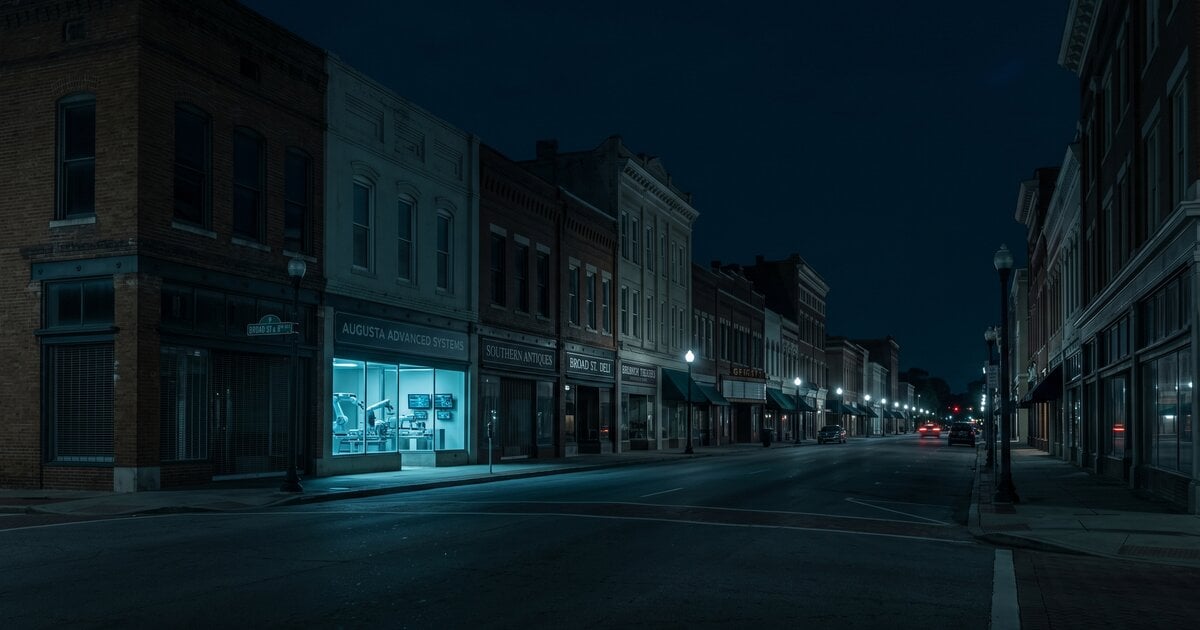
It’s 10 PM on a Tuesday in Augusta. The restaurants on Broad Street are closed. The medical offices near Augusta University are dark. The lawn care crews are home. But the work hasn’t stopped. Augusta small business automation systems are just getting started.
A physician fills out a contact form on a medical device supplier’s website. A couple books a table at Frog Hollow for Friday night. A homeowner texts a plumber about a leaking water heater. The requests are coming in at all hours. The question is whether anyone’s home to catch them, or whether Augusta small business automation handles it while you sleep.
According to research from Ramsey Solutions, 42% of small-business owners experienced burnout in the past year. Nearly half report their business cost them sleep. Not because they’re bad at their jobs. Because the work never stops, and most small businesses stop answering when the owner goes home.
The After-Hours Gap
Here’s what happens between 6 PM and 6 AM in a typical Augusta small business that hasn’t automated anything.
A call comes in at 8:47 PM. It goes to voicemail. The caller doesn’t leave one. They call the next business on their list. A form gets submitted at 11:32 PM. It sits in an inbox until 9 AM the next morning. By then, the lead has already moved on. Someone leaves a Google review at 7 AM. No one sees it until lunch. If it’s a good one, you missed the chance to thank them fast. If it’s a bad one, it’s been sitting there for six hours while other prospects read it.
The math is simple. If you’re not working, your business isn’t working. At least, that’s what most owners convince themselves of.
I talked to a dentist here in Augusta a few months back. She told me she checks her phone before bed to see if any appointment requests came through. Not because she’s going to respond at 10 PM. Just to know whether she’s waking up behind. That’s the circus we’ve all built. You can’t stop thinking about the business because the business can’t run without you thinking about it.
But here’s the thing. It can.
What Augusta Businesses Are Doing at Night
Walk down Broad Street at midnight and the storefronts are dark. But if you could see inside the systems, you’d see something else.
At a chiropractic practice off Washington Road, an AI receptionist is answering texts. A patient asks if they take new clients. The system replies in 90 seconds with a link to book a consultation. No human involved. The doctor’s asleep. The lead’s booked.
At one of Augusta’s premier restaurants, a reservation comes through at 2 AM from someone planning their weekend. The system confirms it, sends a calendar invite, enrolls them in a reminder sequence. By the time the host shows up for their shift Friday afternoon, the table’s already on the books.
A landscaping company with crews all over Richmond County gets a quote request Sunday morning at 6:43 AM. The system sends the pricing sheet immediately. Two days later, if they haven’t replied, it follows up. The owner didn’t write a single email. The Augusta small business automation system handled it.
This isn’t big-business stuff. This is what small businesses in Augusta are doing right now because they got tired of losing leads to faster competitors. According to the SBE Council’s 2026 survey, 82% of small business employers have already invested in AI tools. They’re not doing it to be fancy. They’re doing it because the alternative is checking your phone at 10 PM every night for the rest of your career.
The Sleep Math
Research from ZipDo found that small business owners lose an average of seven hours of sleep per week. That’s 28 hours a month. One full day of sleep every month, gone. Not because you’re working those hours. Because you’re thinking about the work that isn’t getting done while you’re not working.
Here’s what that looks like in practice. You get home at 6:30. You eat dinner. You sit down to relax. But the question is already there. Did anyone call? Did that lead respond? Did I follow up with the guy from last week? So you check. And once you check, you see three things that need handling. So you handle them. It’s 9 PM now. You’ve worked another 90 minutes without realizing it.
The next night, you don’t check. You’re disciplined. But you’re thinking about it. You’re wondering if something’s slipping. That’s the seven hours. It’s not all keyboard time. It’s mental load. It’s the inbox that lives in your head.
Automation doesn’t just handle the work. It handles the wondering. When you know the system’s running, you stop checking. The calls get answered. The forms get replies. The follow-ups happen. You’re not wondering anymore because you know it’s covered.
The Augusta Advantage
Augusta’s not Atlanta. We don’t have the same startup scene or the same VC money floating around. But we’ve got something better for small business owners. We’ve got industries where relationships matter more than scale.
The medical practices around Augusta University aren’t trying to be the biggest in the Southeast. They’re trying to take great care of the patients they have and grow carefully. The restaurants downtown aren’t trying to franchise to 40 cities. They’re trying to fill tables and build regulars. The trades, the lawn care companies, the gyms, the coffee shops on Reynolds Street. They’re all relationship businesses. Quality over quantity. Do the work well, treat people right, grow by referral.
That model works until the relationship-building starts happening at 9 PM and you’re the only one awake to do it. A physician calls after hours because that’s when they finally have time. A couple books a reservation on Sunday morning because they’re planning their week. A homeowner texts on Saturday because the sink just started leaking and they’re standing there with a bucket.
If your system can’t handle it, someone else’s will. And in a town like Augusta, where word of mouth is everything, losing one lead because you were asleep costs you more than the lead. It costs you the five people they would’ve told if you’d blown them away with a fast response.
Automation is the equalizer. It lets you compete on speed without burning out on hours.
What This Actually Looks Like
I’m not talking about replacing people. I’m talking about covering the gaps. An AI receptionist that answers calls and texts when you’re with a patient, at dinner, or asleep. An intake system that replies to form submissions in two minutes instead of two hours. A follow-up sequence that nurtures leads without you remembering to send the third email on Thursday.
The physician who wanted your battery guide at 11 PM? She gets an immediate text. “Your guide is being prepared, delivery in 2-3 days. Here’s a quick-start PDF while you wait.” She clicks the link. She reads it. By the time you wake up Monday, she’s already halfway sold because your system treated her request like it mattered, even at 11 PM.
The homeowner who texted about the leaking sink at 7 AM Saturday? He gets a reply in 90 seconds. “Got it. We can be there Monday morning at 9 or Tuesday afternoon at 2. Reply with which works.” He picks one. Your system books it. You show up Monday, fix the sink, and he tells his neighbor you were the only plumber who answered. That neighbor’s his brother-in-law, who owns a small hotel downtown. Now you’ve got a commercial account because your system didn’t sleep in on Saturday.
This is what Augusta small business automation looks like when it’s done right. Not robots. Not replacing the human work. Just making sure the work that can happen automatically does happen automatically, so you can spend your time on the work that actually needs you.
Your business doesn’t sleep. You shouldn’t have to either.
Running a small business in Augusta and curious where AI could give you your nights back? Book a strategy call. No pitch deck, no pressure.